
MCGT Professional Series Speaker Event
Co-Sponsored by Cottonwood Center and the Minnesota Department of Education
PDA and Co-Regulation:
A 2 Part Series for those working with 2E Children
Presenters: Dr. Danika Maddocks and Dr. Mary Wandrei
2 Sessions: Fridays, 12:00pm - 2:00pm CST via Zoom
- November 13, 2026
- February 26, 2027
We wanted professional development for the practitioner - directly applicable to the neurodivergent and gifted clients in our offices and classrooms. So we created it. Join Dr. Danika Maddocks and Dr. Mary Wandrei in understanding two timely themes for guiding the gifted: Pathological Demand Avoidance (or Pervasive Drive for Autonomy) and co-regulation skills. PD is provided in 2 two-hour sessions, available asynchronously if needed, and CEU credits are available from the MN Board of Psychology and MN Department of Education.
November 13, 2026
Gifted PDAers - Who They Are and What They Need
Although research on Pathological Demand Avoidance or Pervasive Drive for Autonomy (PDA) is limited, many families, clinicians, and educators are recognizing the PDA framework as a helpful tool to understand and support some of the children and adolescents who have been difficult to understand and support with other frameworks and approaches. In this presentation, Dr. Danika Maddocks will describe how the PDA profile and PDA characteristics present in gifted and twice-exceptional youth. She will also share guiding principles and specific strategies to support PDAers in therapy and in the classroom.
Learning objectives of this session:
-
Identify 3-5 core characteristics associated with the PDA profile
-
Explain two reasons that PDA may be missed in gifted and twice-exceptional people
-
Describe two guiding principles that professionals can use to support gifted PDAers in therapy or in the classroom
-
Name three specific strategies for therapy or the classroom that are PDA-informed and PDA-affirming
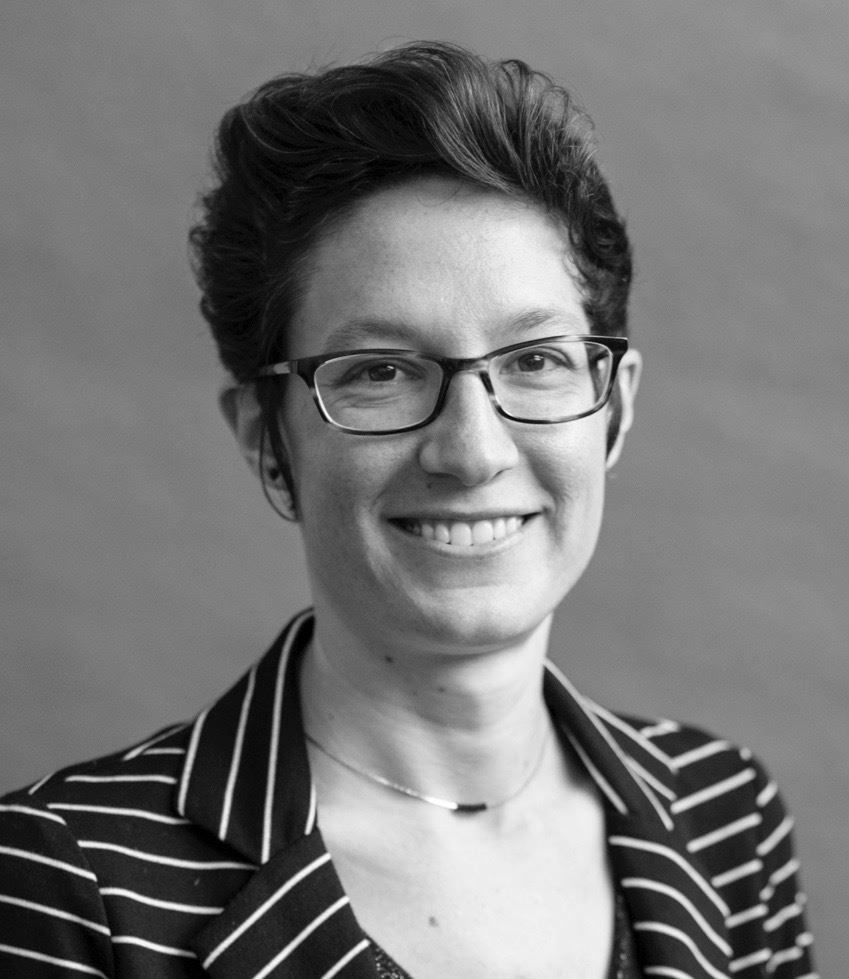 Dr. Danika Maddocks is a psychologist, gifted/2e parent coach, and owner of The Gifted Learning Lab. As a coach, she helps parents let go of standard parenting pressures and build a unique family life that actually works for their kid and themselves. As a therapist, she helps gifted/2e kids and teens understand themselves, like themselves, and build lives that are a good fit for their body and brain. Her approach is rooted in the neurodiversity paradigm and informed by over 15 years supporting gifted/2e families as an educator, therapist, researcher, and consultant - plus personal experiences growing up gifted, recognizing her own twice-exceptionality at age 39, and raising a young 2e kid.
February 26, 2027
Co-Regulation and Self-Regulation: Responsive Guidance for Gifted Children and Their Families
Why can a child reason brilliantly in one moment and become unable to think, cooperate, or recover in the next? This program examines co-regulation as a reciprocal process in which a child and a responsive adult influence one another’s arousal, emotions, thinking, and behavior. Participants will connect developmental research on caregiver support, stress physiology, and emotion socialization to the gradual development of self-regulation. Through clinical and school-based examples involving gifted children and other exceptional learners, participants will consider how intensity, asynchronous development, context, and individual differences may change the support a child needs without assuming that giftedness itself predicts dysregulation.
Participants will learn practical strategies spanning emotional connection, thinking together, and guided action. Case examples will illustrate how adults can read the child’s perspective and their own limits, set safe and flexible boundaries, repair mismatches, and gradually transfer responsibility. Attendees will leave with a framework for coaching parents and educators that preserves the child’s agency while providing developmentally appropriate guidance.
Learning objectives of this session:
- Explain two developmental and two stress-physiology mechanisms through which adult support can contribute to a child’s regulation, while identifying a limit of current neurobiological evidence.
- Select and demonstrate at least five of ten responsive co-regulation strategies for a parent or educator in a case vignette, including a safety boundary and a gradual transfer of responsibility.
- Analyze how a gifted child’s developmental profile, context, and possible co-occurring needs may alter the selection and pacing of co-regulation supports without relying on giftedness stereotypes.
- Formulate a brief coaching plan that accounts for the child’s perspective, adult capacity, rupture and repair, and observable signs that a strategy is helping.
 Mary L. Wandrei, PhD, LP, has worked in the mental health field for over 30 years and has been a licensed psychologist since 1998. She is the founder of Cottonwood Center, in White Bear Lake, MN, where she works primarily with gifted, neurodivergent, and multi-exceptional children and adults. Her specialties include autism identity and skill development; school adjustment and educational planning; and consultation around executive functioning, anxiety, depression, sensory processing, and temperament issues. Dr. Wandrei supervises therapists in training, who often have openings when therapy is hard to find, and offers office space for multidisciplinary providers (therapists, nutritionists, coaches) who work with intense and gifted individuals. She is also the primary supervisor at Dynamic Connections, a relationship-based day treatment center for individuals with autism.
Continuing Education Credits:
This Presentation has been approved for 4 hours of Continuing Education through the MN Board of Psychology (Log #202710.080) or 4 hours of Continuing Education from the Minnesota Department of Education. CEU documentation will be sent directly to participants.
Format:
This series consists of two separate two-hour virtual speaker events, available both live and asynchronous to participants. Continuing education certificates will be available after completion of the learning experience.
Fee:
$100 Individual rate
$70 for MCGT Professional Members and MCGT Sponsors
Not a MCGT Professional member? Join online now!
$30 for Undergraduate, Graduate Students, and Pre-licensed Professionals
Questions? Email info@mcgt.net


